Stable Payment Mechanisms Supporting Safer Mobile Gaming Habits
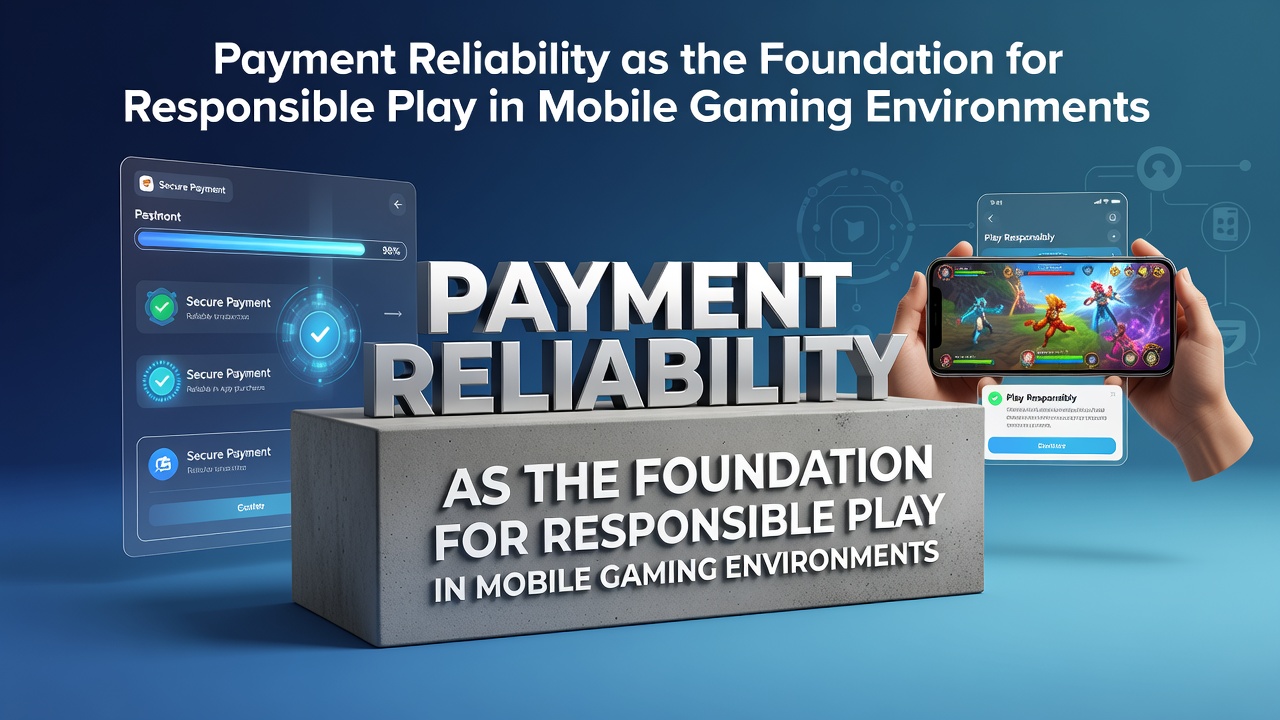 Payment systems that process deposits and withdrawals without delays or errors create the conditions players need to maintain control over their activity. When funds move predictably, users gain clearer visibility into their spending patterns and can adjust limits before problems escalate. Data from the American Gaming Association shows that platforms with consistent transaction performance report higher rates of players who set and respect deposit caps over extended periods. Reliable processing also reduces the frustration that sometimes pushes individuals toward chasing losses. A failed deposit or delayed withdrawal can interrupt a session in ways that encourage impulsive decisions, whereas smooth operations let users pause and reassess. Observers note that this stability matters most during live events and time-limited promotions common in mobile environments. **Integration with spending controls**
Modern mobile platforms connect payment gateways directly to built-in responsible gaming features. When a player reaches a pre-set threshold, the system blocks further deposits automatically, and the transaction record updates in real time. This linkage works because the payment infrastructure itself remains stable enough to enforce rules without glitches. Researchers at the University of Nevada's International Gaming Institute have documented how seamless payment verification supports self-exclusion tools across multiple jurisdictions. Their findings indicate that players who experience reliable fund movements are more likely to activate cooling-off periods when prompted by spending alerts. - Transaction logs update instantly, giving users accurate spending totals
- Automated limit enforcement relies on uninterrupted payment channels
- Withdrawal requests processed on schedule reduce anxiety that can lead to continued play
**Current developments in July 2026**
In July 2026 several regions introduced updated technical standards requiring payment processors to maintain 99.8 percent uptime for licensed mobile operators. These rules emerged after regulators observed correlations between service interruptions and increased helpline contacts. Platforms that already invested in redundant payment rails adapted quickly, while others faced temporary restrictions until upgrades were verified. What's interesting is how these standards also mandate clearer fee disclosures at the point of transaction. Players now see exact costs before confirming any transfer, which supports informed decisions rather than reactive spending.
Payment systems that process deposits and withdrawals without delays or errors create the conditions players need to maintain control over their activity. When funds move predictably, users gain clearer visibility into their spending patterns and can adjust limits before problems escalate. Data from the American Gaming Association shows that platforms with consistent transaction performance report higher rates of players who set and respect deposit caps over extended periods. Reliable processing also reduces the frustration that sometimes pushes individuals toward chasing losses. A failed deposit or delayed withdrawal can interrupt a session in ways that encourage impulsive decisions, whereas smooth operations let users pause and reassess. Observers note that this stability matters most during live events and time-limited promotions common in mobile environments. **Integration with spending controls**
Modern mobile platforms connect payment gateways directly to built-in responsible gaming features. When a player reaches a pre-set threshold, the system blocks further deposits automatically, and the transaction record updates in real time. This linkage works because the payment infrastructure itself remains stable enough to enforce rules without glitches. Researchers at the University of Nevada's International Gaming Institute have documented how seamless payment verification supports self-exclusion tools across multiple jurisdictions. Their findings indicate that players who experience reliable fund movements are more likely to activate cooling-off periods when prompted by spending alerts. - Transaction logs update instantly, giving users accurate spending totals
- Automated limit enforcement relies on uninterrupted payment channels
- Withdrawal requests processed on schedule reduce anxiety that can lead to continued play
**Current developments in July 2026**
In July 2026 several regions introduced updated technical standards requiring payment processors to maintain 99.8 percent uptime for licensed mobile operators. These rules emerged after regulators observed correlations between service interruptions and increased helpline contacts. Platforms that already invested in redundant payment rails adapted quickly, while others faced temporary restrictions until upgrades were verified. What's interesting is how these standards also mandate clearer fee disclosures at the point of transaction. Players now see exact costs before confirming any transfer, which supports informed decisions rather than reactive spending.  **Data transparency and player awareness**
Payment reliability extends beyond speed. Detailed, accurate statements allow users to review their activity over weeks or months. When records arrive consistently and without discrepancies, players can identify patterns early and seek support if needed. Studies conducted through Gambling Research Australia reveal that participants who received monthly transaction summaries were 27 percent more likely to adjust their budgets proactively. The same research notes that irregular statements correlate with higher rates of disputed charges and subsequent account closures. But here's the thing: reliability alone does not replace education. Operators combine stable payment systems with clear messaging about time and money limits. The combination creates an environment where users encounter fewer barriers to responsible choices. **Regional approaches and industry standards**
Different markets have adopted distinct methods for ensuring payment dependability. European operators often integrate open banking protocols that verify funds in seconds, while North American platforms emphasize tokenized card processing to reduce failed attempts. Both approaches aim for the same outcome: uninterrupted service that supports player-set boundaries. Industry groups such as the Responsible Gambling Council in Canada have published guidelines encouraging operators to audit payment partners regularly. These audits check not only technical uptime but also the clarity of confirmation messages that appear after each transfer. **Conclusion**
Payment reliability functions as infrastructure for responsible play rather than an optional feature. When deposits and withdrawals occur without friction, players maintain better awareness of their activity and can use available tools more effectively. Continued improvements in transaction stability, paired with transparent reporting, give mobile gaming environments the foundation needed for sustained player protection across evolving regulatory landscapes.
**Data transparency and player awareness**
Payment reliability extends beyond speed. Detailed, accurate statements allow users to review their activity over weeks or months. When records arrive consistently and without discrepancies, players can identify patterns early and seek support if needed. Studies conducted through Gambling Research Australia reveal that participants who received monthly transaction summaries were 27 percent more likely to adjust their budgets proactively. The same research notes that irregular statements correlate with higher rates of disputed charges and subsequent account closures. But here's the thing: reliability alone does not replace education. Operators combine stable payment systems with clear messaging about time and money limits. The combination creates an environment where users encounter fewer barriers to responsible choices. **Regional approaches and industry standards**
Different markets have adopted distinct methods for ensuring payment dependability. European operators often integrate open banking protocols that verify funds in seconds, while North American platforms emphasize tokenized card processing to reduce failed attempts. Both approaches aim for the same outcome: uninterrupted service that supports player-set boundaries. Industry groups such as the Responsible Gambling Council in Canada have published guidelines encouraging operators to audit payment partners regularly. These audits check not only technical uptime but also the clarity of confirmation messages that appear after each transfer. **Conclusion**
Payment reliability functions as infrastructure for responsible play rather than an optional feature. When deposits and withdrawals occur without friction, players maintain better awareness of their activity and can use available tools more effectively. Continued improvements in transaction stability, paired with transparent reporting, give mobile gaming environments the foundation needed for sustained player protection across evolving regulatory landscapes.
Payment systems that process deposits and withdrawals without delays or errors create the conditions players need to maintain control over their activity. When funds move predictably, users gain clearer visibility into their spending patterns and can adjust limits before problems escalate. Data from the American Gaming Association shows that platforms with consistent transaction performance report higher rates of players who set and respect deposit caps over extended periods. Reliable processing also reduces the frustration that sometimes pushes individuals toward chasing losses. A failed deposit or delayed withdrawal can interrupt a session in ways that encourage impulsive decisions, whereas smooth operations let users pause and reassess. Observers note that this stability matters most during live events and time-limited promotions common in mobile environments. **Integration with spending controls**
Modern mobile platforms connect payment gateways directly to built-in responsible gaming features. When a player reaches a pre-set threshold, the system blocks further deposits automatically, and the transaction record updates in real time. This linkage works because the payment infrastructure itself remains stable enough to enforce rules without glitches. Researchers at the University of Nevada's International Gaming Institute have documented how seamless payment verification supports self-exclusion tools across multiple jurisdictions. Their findings indicate that players who experience reliable fund movements are more likely to activate cooling-off periods when prompted by spending alerts. - Transaction logs update instantly, giving users accurate spending totals
- Automated limit enforcement relies on uninterrupted payment channels
- Withdrawal requests processed on schedule reduce anxiety that can lead to continued play
**Current developments in July 2026**
In July 2026 several regions introduced updated technical standards requiring payment processors to maintain 99.8 percent uptime for licensed mobile operators. These rules emerged after regulators observed correlations between service interruptions and increased helpline contacts. Platforms that already invested in redundant payment rails adapted quickly, while others faced temporary restrictions until upgrades were verified. What's interesting is how these standards also mandate clearer fee disclosures at the point of transaction. Players now see exact costs before confirming any transfer, which supports informed decisions rather than reactive spending.
**Data transparency and player awareness**
Payment reliability extends beyond speed. Detailed, accurate statements allow users to review their activity over weeks or months. When records arrive consistently and without discrepancies, players can identify patterns early and seek support if needed. Studies conducted through Gambling Research Australia reveal that participants who received monthly transaction summaries were 27 percent more likely to adjust their budgets proactively. The same research notes that irregular statements correlate with higher rates of disputed charges and subsequent account closures. But here's the thing: reliability alone does not replace education. Operators combine stable payment systems with clear messaging about time and money limits. The combination creates an environment where users encounter fewer barriers to responsible choices. **Regional approaches and industry standards**
Different markets have adopted distinct methods for ensuring payment dependability. European operators often integrate open banking protocols that verify funds in seconds, while North American platforms emphasize tokenized card processing to reduce failed attempts. Both approaches aim for the same outcome: uninterrupted service that supports player-set boundaries. Industry groups such as the Responsible Gambling Council in Canada have published guidelines encouraging operators to audit payment partners regularly. These audits check not only technical uptime but also the clarity of confirmation messages that appear after each transfer. **Conclusion**
Payment reliability functions as infrastructure for responsible play rather than an optional feature. When deposits and withdrawals occur without friction, players maintain better awareness of their activity and can use available tools more effectively. Continued improvements in transaction stability, paired with transparent reporting, give mobile gaming environments the foundation needed for sustained player protection across evolving regulatory landscapes.